Sanand Soyla Village Map & Land Investment Guide
Executive Summary
Soyla is a village in the Sanand sub district of Ahmedabad district, Gujarat. It has a population of 2,230 people and 422 households, according to the 2011 Census of India. The village is located close to Sanand town, which is 3 km away. This proximity offers advantages in terms of access to markets and services. With a literacy rate of 64.4%, Soyla indicates a need for further educational development.
The village's economy is heavily dependent on agriculture. 67.3% of the workforce is involved in agricultural activities. The total geographical area of Soyla is 550.4 hectares. This guide will provide potential property buyers and land investors with a comprehensive overview of Soyla, covering its location, demographics, infrastructure, economy, and investment potential.
Soyla's development is influenced by its geographical attributes and connectivity. The Gram Panchayat of Soyla oversees local administration. The village benefits from mobile coverage and bus services. Understanding land records and local regulations is vital for making informed investment decisions.
This guide provides detailed information on verifying land records and navigating the NA conversion process. It also includes a SWOT analysis to help investors assess the opportunities and challenges associated with investing in Soyla. Overall, Soyla presents a mix of opportunities and challenges, with its agricultural base and proximity to Sanand offering potential for future growth.
Location and Geography of Soyla
Soyla is situated in the Ahmedabad district of Gujarat, specifically within the Sanand sub district. It is positioned conveniently close to Sanand town, which is only 3 kilometers away. This location provides Soyla with relatively easy access to urban amenities and economic opportunities. Ahmedabad, the district headquarters, is located 27 km from Soyla.

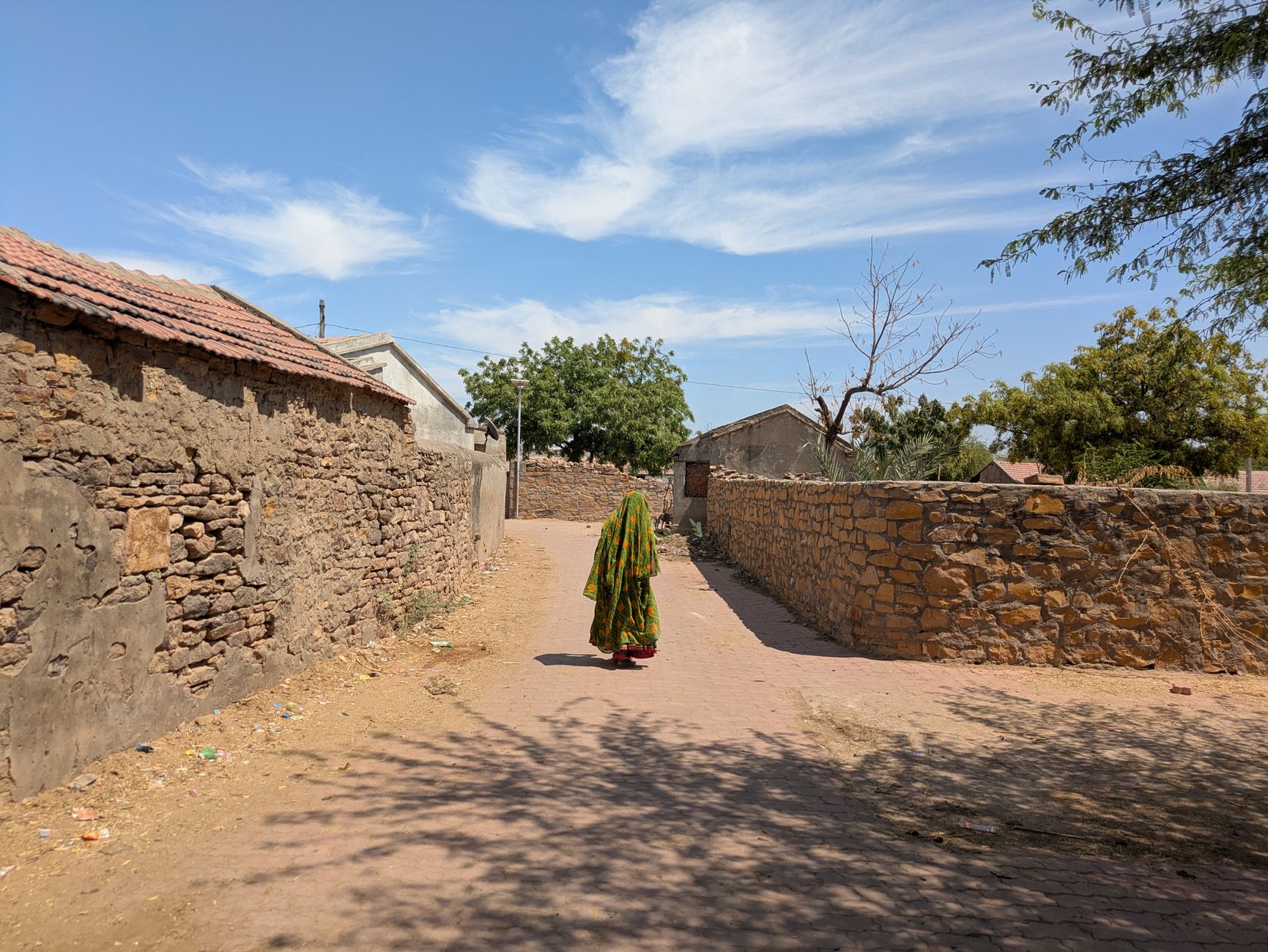
The village occupies a total geographical area of 550.4 hectares. This land area includes agricultural fields, residential areas, and common village lands. The terrain around Soyla is generally flat, typical of the fertile plains of Gujarat. This flatness is conducive to agriculture and eases the development of infrastructure.
The soil type in and around Soyla is primarily alluvial. Alluvial soil is known for its fertility and suitability for a variety of crops. Farmers in the region commonly cultivate crops such as cotton, groundnut, and various vegetables. The fertility of the soil contributes significantly to the agricultural dependency of the village, with 67.3% of the workforce engaged in agriculture.
Water resources in Soyla are crucial for irrigation and domestic use. While detailed information on specific water sources (like rivers, canals, or groundwater levels) is not available in the census data, it's common for villages in this region to rely on a combination of groundwater, monsoon rains, and possibly canal irrigation systems. Ensuring sustainable water management is needed for the long term viability of agriculture in Soyla.
Soyla's location near Sanand positions it favorably for peri urban development. This means it could experience a blend of rural and urban influences, offering opportunities for real estate and infrastructure development in the coming years. Understanding the local geography and water resources is important for anyone considering investing in land in Soyla.
Soyla's location also means it could potentially benefit from infrastructure projects under the PM Gati Shakti program. This national initiative aims to improve multi modal connectivity and logistics efficiency across the country. (https://pmgatishakti.gov.in/) Any future infrastructure upgrades near Soyla could significantly boost its economic prospects.
Socio Demographic Profile
According to the 2011 Census, Soyla has a population of 2,230 people. Of this, 1,098 are male and 1,132 are female. This makes Soyla a relatively small village. The population density is 4.1 persons per hectare.
The total number of households in Soyla is 422. This figure gives an idea of the average family size in the village. Further data on household income or social stratification is not available in the provided census data.
Soyla has a literacy rate of 64.4%. This means that a significant portion of the population is literate. There is still room for improvement in educational attainment. Literacy is a crucial factor for overall development and economic empowerment.
The sex ratio in Soyla is notably high. It stands at 1,031 females per 1,000 males. This is higher than the national average. It indicates a relatively balanced demographic structure.
The worker participation rate in Soyla is 41.1%. This means that around 41% of the population is part of the workforce. This workforce is primarily engaged in agriculture. The census data indicates that 67.3% of the workforce is dependent on agriculture.
Of the total workers (917), 246 are main cultivators and 371 are agricultural laborers. This breakdown highlights the dominance of agriculture as the primary occupation in Soyla. Other occupational categories are not available in the census data. The socio demographic profile of Soyla reveals a village with a predominantly agricultural economy. There is a need for improvements in literacy and diversification of the workforce.
Planning and Government Regulations
Understanding planning and government regulations is vital for any land investment in Soyla. This includes understanding Floor Space Index (FSI)/Floor Area Ratio (FAR) rules, land use zoning, the Non Agricultural (NA) conversion process, and alignment with any applicable Master Plan.
Unfortunately, detailed information on specific FSI/FAR rules for Soyla is not available in the provided census data or easily accessible without consulting local authorities. FSI/FAR dictates the maximum permissible construction area on a given plot of land. These regulations are crucial as they directly impact the development potential of any property. You should contact the Sanand Area Development Authority or the Ahmedabad Urban Development Authority (AUDA) to get the exact FSI/FAR applicable to specific land parcels in Soyla.
Land use zoning regulations also determine how land can be used (e.g., residential, commercial, industrial, agricultural). The absence of specific zoning data in the census necessitates direct consultation with local planning authorities. Understanding zoning is essential to ensure that your intended use of the land is permissible under existing regulations.
The NA conversion process is a critical step when converting agricultural land for non agricultural purposes, such as residential, commercial, or industrial use. The process involves obtaining permission from the relevant authorities to change the land use. The Gujarat Land Revenue Code governs this process. Specific details on the application procedure, required documents, and fees can be obtained from the local revenue department or the Gujarat government's land records portal.
Alignment with a Master Plan is another crucial aspect. A Master Plan is a long term plan that guides the overall development of an area. It outlines proposed infrastructure projects, land use zones, and other developmental initiatives. Soyla, being near Sanand and Ahmedabad, may fall under the influence of regional development plans. You should check with AUDA to see if any such plans impact Soyla. Understanding how your land investment aligns with existing or proposed development plans is critical for long term value appreciation.
It is highly recommended to engage with local authorities and legal experts to navigate these regulatory complexities. The Digital India Land Records Modernization Programme (https://dolr.gov.in/) is a good place to start for accessing land records information, but it will not provide zoning or FSI information. Compliance with all applicable regulations is necessary for a secure and profitable land investment in Soyla.
Physical Infrastructure
Soyla has basic physical infrastructure. According to the 2011 Census, the village has mobile coverage and bus service connectivity. This indicates a degree of integration with the surrounding region. However, details on the quality and frequency of these services are not available.
Road connectivity is a crucial factor for accessing markets and services. Soyla's proximity to Sanand (3 km) and Ahmedabad (27 km) suggests that it is likely connected by paved roads. However, information on the specific types and conditions of roads within the village and connecting it to major centers is not provided in the census data. The quality of road infrastructure can significantly impact transportation costs and accessibility.
Information on power supply in Soyla is not explicitly provided in the census. However, most villages in Gujarat have access to electricity. Enquiring with the local electricity distribution company (usually Gujarat Urja Vikas Nigam Limited or its subsidiary) is necessary to ascertain the reliability and voltage of power supply in Soyla. Stable power supply supports residential, commercial, and agricultural activities.
Details regarding the water supply infrastructure in Soyla are not available in the census data. Typically, villages in Gujarat rely on a combination of groundwater, piped water supply schemes, and rainwater harvesting. Contacting the local Gram Panchayat or the Public Health Engineering Department is essential to understand the source, quality, and reliability of the water supply. Access to clean and reliable water is a basic necessity and a key factor for any development.
Telecom coverage, as indicated by the presence of mobile coverage, suggests that Soyla is connected to the wider world through mobile networks. This is beneficial for communication, access to information, and economic activities. However, data on internet connectivity (e.g., broadband availability) is not provided. Improved internet access can open up opportunities for education, e commerce, and other online services.
Overall, Soyla has basic physical infrastructure in place. Detailed assessment of the quality and reliability of each component is needed before making any investment decisions. Future infrastructure development under government schemes such as the PM Gati Shakti (https://pmgatishakti.gov.in/) could further improve the physical infrastructure landscape in Soyla.
Social Infrastructure
Soyla has basic social infrastructure. The 2011 Census indicates that there is 1 school in the village. This school is a primary school. This limited availability of educational institutions may require residents to travel to nearby towns for secondary or higher education.
Information on health facilities in Soyla is not provided in the census data. It is possible that the village has a primary health sub center or relies on health services available in Sanand or Ahmedabad. Access to quality healthcare is a crucial factor for the well being of the population. Detailed investigation is required to determine the availability and quality of healthcare facilities serving Soyla.
The Gram Panchayat of Soyla serves as the local governing body. It is responsible for local administration and development activities. Details on other local institutions such as community centers, libraries, or self help groups are not available in the census data. These institutions play an important role in fostering social cohesion and community development.
The limited social infrastructure in Soyla highlights the need for further investment in education and healthcare. Improved access to quality social services can significantly enhance the quality of life for residents and contribute to the overall development of the village. Government initiatives and community participation are essential for strengthening social infrastructure in Soyla.
Land Records Verification Guide
Verifying land records is a crucial step before investing in land in Soyla. This process ensures that the seller has a clear title to the property and that there are no encumbrances or legal disputes. The Gujarat government provides online portals for accessing and verifying land records.
The primary online resource for land records in Gujarat is the e Dhara website. This portal allows you to search for land records by village, survey number, and other relevant details. The official website for e Dhara is not provided in the prompt. However, a simple online search will reveal the active link.
The process typically involves the following steps:
- Access the e Dhara portal: Visit the official website.
- Select District, Taluka, and Village: Choose Ahmedabad, Sanand, and Soyla respectively from the dropdown menus.
- Enter Property Details: Provide the survey number (also known as Khasra number) or other identifying information for the land you are interested in.
- View and Download Records: Once you have entered the details, you can view the land record (also known as the Record of Rights or 7/12 extract) online. You can also download a copy for your records.
The 7/12 extract is a crucial document that provides information about the land. This includes the owner's name, area of the land, type of soil, details of cultivation, and any encumbrances (such as mortgages or loans) on the property.
Checking for mutations is also essential. A mutation is a change in the ownership of the land. It occurs when the property is sold, inherited, or transferred in any other way. You can check the mutation records on the e Dhara portal to ensure that all past transactions have been properly recorded.
To verify the title chain, you need to trace the history of ownership of the land. This involves examining the land records and mutation records for the past several years. This helps to ensure that there are no gaps or inconsistencies in the ownership history. If you are not familiar with land records, it is advisable to seek the help of a lawyer or a land records expert.
In addition to online verification, it is also recommended to physically inspect the land and verify its boundaries. This can help to identify any encroachments or disputes. You should also obtain a non encumbrance certificate from the sub registrar's office. This certificate confirms that there are no registered encumbrances on the property. The Digital India Land Records Modernization Programme (https://dolr.gov.in/) aims to streamline and digitize land records. The NITI Aayog (https://niti.gov.in/) also promotes land reforms to improve transparency and efficiency.
Economic Engine of Soyla
Soyla's economy is primarily driven by agriculture. The census data confirms this with 67.3% of the workforce being dependent on agriculture. This highlights the importance of farming for the livelihoods of the majority of the village residents.
The breakdown of total workers (917) into main cultivators (246) and agricultural laborers (371) reveals the structure of the agricultural economy. Main cultivators are landowners who cultivate their own land. Agricultural laborers work on the land of others for wages. This means that a significant portion of the agricultural workforce are landless laborers.
Detailed information on specific crops cultivated in Soyla is not available in the census data. However, given the region, it is likely that common crops include cotton, groundnut, millet, and various vegetables. The productivity of these crops and the prices they fetch in the market directly impact the income of the farmers and laborers in Soyla.
Nearby industries in Sanand and Ahmedabad also influence Soyla's economy. Sanand is an industrial hub with the presence of major manufacturing plants, including automobile factories. This provides some employment opportunities for the residents of Soyla. Some residents may commute to Sanand or Ahmedabad for work in factories, construction, or other service sector jobs.
Commuter patterns from Soyla to nearby towns are not explicitly documented in the census data. However, given the proximity to Sanand (3 km) and Ahmedabad (27 km), it is likely that a portion of the workforce commutes daily or weekly for work. Improved transportation infrastructure could facilitate greater commuting and access to employment opportunities in these urban centers.
Diversifying the local economy beyond agriculture significantly affects long term sustainable development. This could involve promoting small scale industries, handicrafts, or tourism related activities. Skill development and training programs can help the residents of Soyla acquire the skills needed to participate in the non agricultural sectors. The Ministry of Housing and Urban Affairs (https://mohua.gov.in/) promotes skill development programs for urban and peri urban areas.
The economic future of Soyla depends on factors such as agricultural productivity, access to markets, industrial growth in nearby areas, and the ability of the workforce to adapt to changing economic opportunities.
Investment Potential and ROI
Investing in land in Soyla requires a careful assessment of its investment potential and potential return on investment (ROI). Land price trends in the area are influenced by several factors, including location, accessibility, infrastructure development, and overall economic growth.
Unfortunately, specific data on land price trends in Soyla is not available in the census data or readily accessible public sources. It is essential to conduct thorough market research to understand the current land prices and recent price appreciation in the area. Consulting with local real estate agents, land brokers, and property consultants is highly recommended. They can provide valuable insights into the local land market dynamics.
The investment potential of land in Soyla is linked to several factors. Its proximity to Sanand (3 km), an industrial hub, is a positive factor. This could lead to increased demand for land for residential, commercial, or industrial purposes. The ongoing development of infrastructure in the region, such as improved roads, power supply, and water supply, can also enhance the value of land.
The agricultural productivity of the land is another important consideration. Fertile agricultural land can generate income through farming or leasing. However, the dependence of the local economy on agriculture also poses a risk, as agricultural incomes are subject to weather conditions, market fluctuations, and government policies.
It is crucial to consider the regulatory aspects of land investment. This includes obtaining the necessary approvals for land use conversion (NA conversion), complying with zoning regulations, and ensuring that the land has a clear title. Failure to comply with these regulations can lead to legal disputes and financial losses.
A balanced assessment of the opportunities and challenges is essential before making any investment decision. The potential ROI on land investment in Soyla will depend on several factors, including the purchase price, development costs, rental income (if any), and the eventual sale price. It is important to develop a realistic financial model that takes into account all these factors.
Disclaimer: Land investment involves risks, and there is no guarantee of returns. The information provided here is for general guidance only and should not be considered as financial or investment advice. It is essential to conduct your own due diligence and consult with qualified professionals before making any investment decisions. Land values can go down as well as up. Past performance is not indicative of future results. This is not a solicitation to invest.
Strategic SWOT Analysis
To gain a strategic perspective on Soyla's development, a SWOT (Strengths, Weaknesses, Opportunities, and Threats) analysis is presented below. This analysis is based on the available data and aims to provide a balanced view of the village's potential and challenges.
Strengths:
- Proximity to Sanand (3 km): Provides access to industrial employment and urban amenities.
- High sex ratio (1,031 females per 1,000 males): Indicates a balanced demographic structure.
- Mobile coverage and bus service: Suggests basic connectivity.
- Fertile agricultural land: Supports a predominantly agricultural economy.
- Gram Panchayat: Active local government.
Weaknesses:
- Low literacy rate (64.4%): Limits human capital development.
- High agricultural dependency (67.3% of workforce): Vulnerable to agricultural risks.
- Limited social infrastructure: Only 1 primary school. No health facility data.
- Lack of detailed information on water supply and power supply: Uncertainty regarding reliability.
- Low population density (4.1 persons per hectare): Suggests limited economic activity.
Opportunities:
- Peri urban development potential: Due to proximity to Sanand and Ahmedabad.
- Diversification of the economy: Promotion of small scale industries and tourism.
- Skill development programs: To enhance employability of the workforce.
- Infrastructure development under government schemes: PM Gati Shakti (https://pmgatishakti.gov.in/) and other initiatives.
- Improved internet connectivity: To facilitate education, e commerce, and other online services.
Threats:
- Fluctuations in agricultural prices: Impacting the income of farmers and laborers.
- Water scarcity: Due to over reliance on groundwater or erratic rainfall.
- Land use regulations: Restrictions on converting agricultural land for other purposes.
- Competition from nearby urban centers: Potential for migration of skilled workers.
- Lack of access to credit and finance: Hindering investment in agriculture and other sectors.
Based on this SWOT analysis, Soyla has the potential for growth and development. However, it also faces several challenges that need to be addressed. Investing in education, diversifying the economy, improving infrastructure, and ensuring sustainable resource management are crucial for realizing Soyla's full potential. The NITI Aayog (https://niti.gov.in/) provides policy recommendations for rural development.
Frequently Asked Questions
Q1: How do I check the ownership of a land parcel in Soyla?
A: You can check the ownership of a land parcel on the e Dhara portal by entering the village name (Soyla) and the survey number of the land. The 7/12 extract will show the current owner's name.
Q2: What is the process for converting agricultural land to non agricultural use in Soyla?
A: The process involves applying to the relevant authorities (usually the local revenue department) under the Gujarat Land Revenue Code. You will need to submit an application with supporting documents, including the land records, a site plan, and a justification for the conversion.
Q3: Are there any restrictions on building houses or commercial structures on agricultural land in Soyla?
A: Yes, there are restrictions. You generally need to obtain NA (Non Agricultural) conversion permission before constructing any non agricultural structures on agricultural land. Consult the local planning authorities for specific regulations.
Q4: What are the main sources of income for people living in Soyla?
A: The main source of income is agriculture. 67.3% of the workforce is engaged in agricultural activities, either as cultivators or laborers.
Q5: How far is Soyla from Ahmedabad, and what are the transportation options?
A: Soyla is 27 km from Ahmedabad. Transportation options include buses and private vehicles. The census data indicates the presence of bus services.
Conclusion
Soyla is a village with a strong agricultural base and proximity to urban centers, presenting both opportunities and challenges for potential investors. While the village benefits from its location near Sanand and Ahmedabad, its low literacy rate and high dependence on agriculture highlight areas that need improvement. Verifying land records, understanding local regulations, and assessing the overall infrastructure are critical steps for anyone considering investing in land in Soyla. Careful planning and a realistic understanding of the local dynamics are essential for successful and sustainable development.