Comprehensive technical analysis of Kadi Dudhai village in Mehsana, Gujarat.
Executive Summary
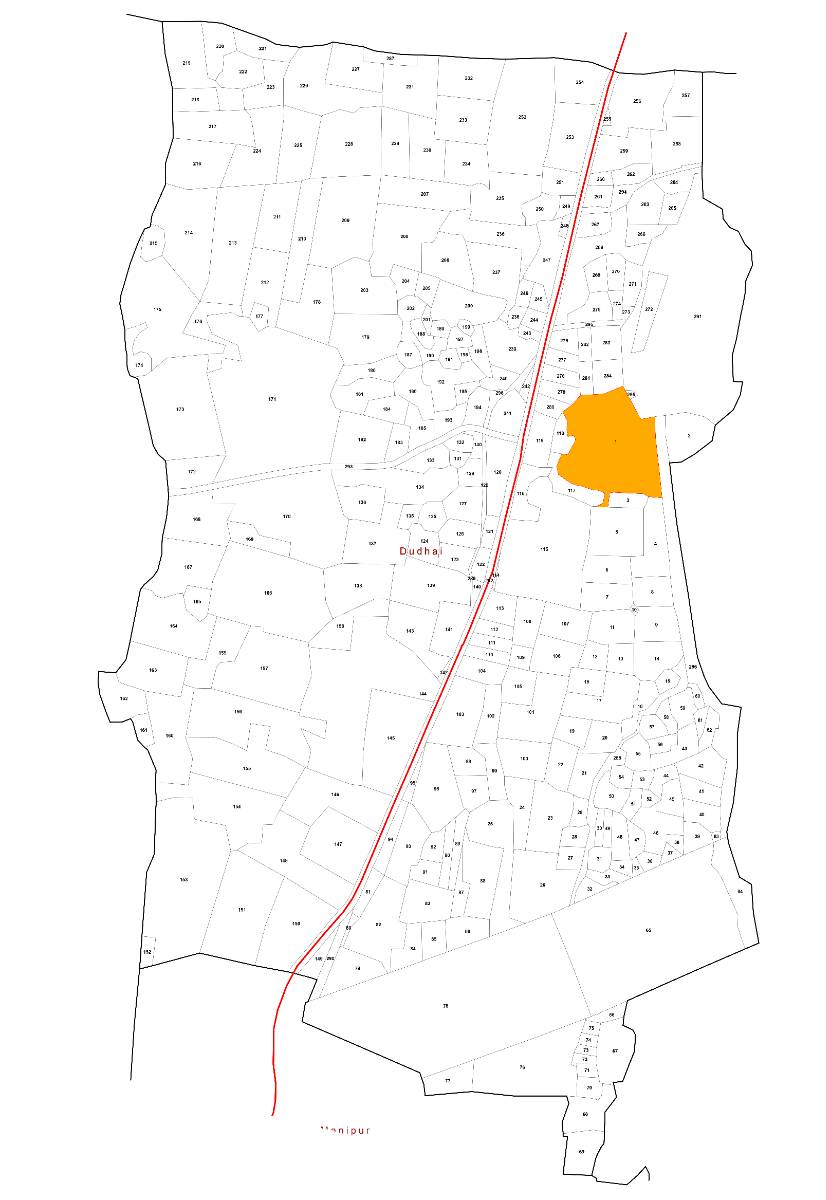
Detailed Village Map: Dudhai
Dudhai is a small village in the Kadi Taluka of Mehsana district, Gujarat. It offers a glimpse into rural life with agriculture as its main economic activity. The village has a high literacy rate, good connectivity and a strong sense of community. However, investors should carefully assess the dependence on agriculture and limited infrastructure before investing.
Dudhai has a population of 823. The village is located 6 km from Kadi and 41 km from Mehsana. The area is primarily agricultural land. The village boasts a high literacy rate of 91.7%. This suggests a focus on education within the community.
For investors, understanding the local regulations and land use policies is critical. The process of converting agricultural land for non agricultural purposes needs careful attention. Dudhai benefits from basic infrastructure such as road connectivity and mobile coverage. However, further development in areas like water supply and power reliability could improve the quality of life.
Dudhai has one primary school, which supports educating the local children. Healthcare facilities are likely accessed in nearby towns. Agriculture dominates the local economy. Most of the workforce is engaged as agricultural laborers.
Investing in Dudhai requires thorough due diligence, including verifying land records and understanding ownership history. While land prices may be relatively affordable, the return on investment depends on factors like agricultural productivity and future development potential. A balanced approach is crucial when considering investment opportunities.
Dudhai's strengths include its high literacy rate, strong agricultural base, and proximity to Kadi. Weaknesses include its dependence on agriculture, limited infrastructure and lack of diverse economic opportunities. Opportunities exist in improving agricultural practices, developing small scale industries and leveraging government schemes. Threats include climate change affecting agriculture and limited access to advanced education and healthcare.
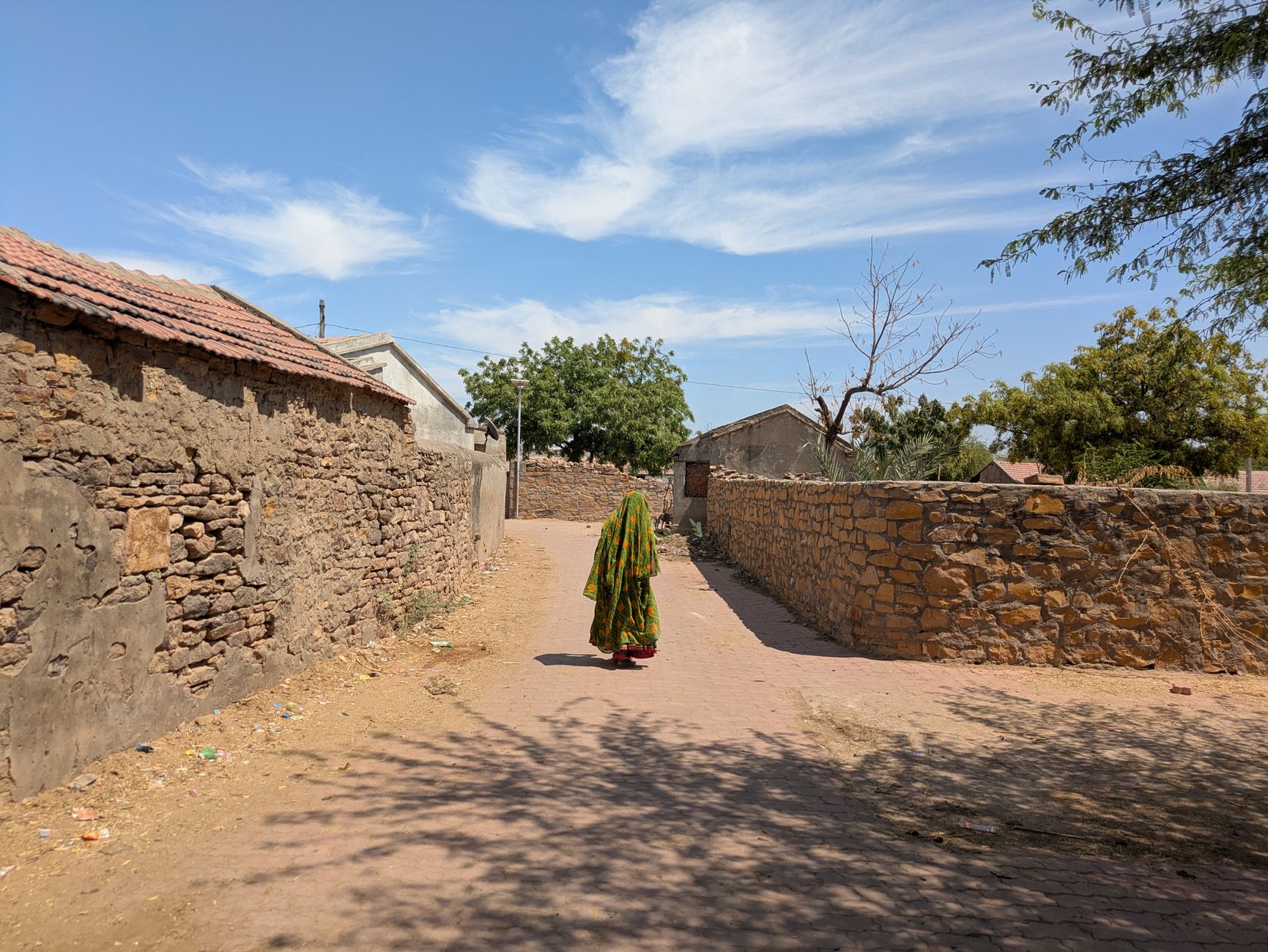
A woman in traditional clothing walks along a rustic village path in Dholavira, India.
Location and Geography of Dudhai
Dudhai is located in the Kadi Taluka of the Mehsana district in Gujarat. The village sits approximately 6 kilometers away from Kadi. It is also about 41 kilometers from Mahesana, the district headquarters. This proximity to both a sub district headquarters and district headquarters impacts access to markets and administrative services.
The total geographical area of Dudhai is 208.4 hectares. This small area impacts the density of housing and land usage. The population density is 3.9 persons per hectare. This indicates a relatively low population density characteristic of rural villages.
Data regarding the specific terrain and soil type of Dudhai are not available. However, the heavy reliance on agriculture suggests the presence of fertile land suitable for farming. Typical soil types in the Mehsana district include alluvial and sandy loam soils. These soils are generally suitable for cultivating crops like cotton, millet, and pulses.
Information on specific water resources within Dudhai is unavailable. Agricultural dependency suggests that the area relies on sources of irrigation. These sources could include wells, canals, or rainwater harvesting. Further study of local water management practices is needed. The availability of water resources will greatly impact the agricultural productivity and sustainability of the village.
Dudhai's location influences its economic activities, infrastructure development, and access to services. The village is positioned to benefit from the growth of nearby Kadi. However, it also faces challenges related to its rural setting. These include limited access to advanced infrastructure and diverse economic opportunities.
Understanding the local geography and available resources matters for any investor or property buyer. A detailed assessment of soil quality, water availability, and terrain suitability can help in making informed decisions about land use and potential development. [PM Gati Shakti: https://pmgatishakti.gov.in/ can assist with visualizing infrastructure and connectivity in the region.
Elderly farmer standing in agricultural field in Palanpur, India.
Socio Demographic Profile of Dudhai
Dudhai is home to 823 residents. Of these, 420 are male and 403 are female. This makes up 155 households within the village. These figures provide a baseline for understanding the community's size and composition.
The sex ratio in Dudhai is 960 females per 1,000 males. This ratio is relatively balanced. It suggests a healthy demographic structure in the village.
Dudhai has an impressive literacy rate of 91.7%. This high rate indicates a strong emphasis on education within the community. It may also indicate a greater openness to new ideas and practices.
The Scheduled Castes population in Dudhai is 101. This represents a significant portion of the village population. Understanding the socio economic status and specific needs of this group is important for inclusive development.
The worker participation rate in Dudhai is 51.8%. This means that a little over half of the population is actively engaged in the workforce. This number is significant when assessing the economic activity and potential for growth in the village.
Expert Land Analysis
Unlock deep insights with our interactive map layers.
Agriculture forms the backbone of the local economy. 71.4% of the workforce depends on agriculture for their livelihood. This number highlights the importance of agriculture to the villagers' income and well being.
Breaking down the workforce further, we see the following: The total number of workers is 426. Main cultivators (farmers who own or lease land) number 25. Agricultural laborers (those who work on others' farms) number 279. This breakdown shows a large segment of the population works as laborers.
Understanding the socio demographic characteristics of Dudhai is important for prospective investors. These details reveal the village's strengths, challenges, and opportunities for sustainable development. They also inform planning and decision making.
Planning and Governance in Dudhai
Information about specific FSI/FAR (Floor Space Index/Floor Area Ratio) rules applicable to Dudhai is not available. These rules are crucial for regulating construction and development in an area. It's important to check with the local authorities in Kadi Taluka for the most current guidelines.
Similarly, precise details on land use zoning for Dudhai are unavailable. Land use zoning determines how different areas within the village can be used. This may include residential, commercial, agricultural, or industrial purposes. Zoning regulations ensure orderly development and prevent conflicting land uses.
The process of converting agricultural land to non agricultural (NA) use is governed by the Gujarat Land Revenue Code. This involves obtaining permission from the relevant authorities. Requirements often include submitting detailed land documents, paying conversion fees, and complying with environmental regulations. The process can be complex and time consuming, so consulting with local legal experts is recommended. The Ministry of Housing and Urban Affairs [https://mohua.gov.in/ provides guidelines on urban and regional planning which may indirectly relate to village planning.
It is not known if Dudhai is directly aligned with any specific Master Plan. Master Plans are long term development blueprints that guide infrastructure projects and land use decisions. Contacting the Kadi Taluka office or the Mehsana District Planning Office is necessary to determine if Dudhai falls under any regional plan.
The Gram Panchayat of Dudhai drives local governance. The Gram Panchayat is responsible for implementing government schemes, managing local resources, and addressing the needs of the villagers. Effective governance at the village level is important for sustainable development and improving the quality of life.
Investors and property buyers must be aware of local planning regulations and governance structures. Failing to comply with these rules can lead to legal complications and financial losses. Due diligence and consultation with local authorities are essential before making any investment decisions.
Physical Infrastructure in Dudhai
Dudhai enjoys mobile coverage and bus service. This connectivity is needed for connecting the village with nearby towns and cities. It facilitates the movement of people and goods.
Details on the quality and frequency of bus services are not available. However, the presence of this service is a positive factor for residents who need to access markets, educational institutions, or healthcare facilities in Kadi or Mehsana.
Specific information on the power supply situation in Dudhai is not available. Reliable electricity is necessary for households, businesses, and agricultural activities. Intermittent power supply can hinder economic development and impact the quality of life.
Similarly, information on the water supply infrastructure in Dudhai is not available. Access to clean and reliable water is a basic necessity. The primary source of water for drinking and irrigation needs to be investigated.
Information on telecom coverage beyond mobile service is not available. A well developed telecom network is important for communication, access to information, and online services. Broadband connectivity can open up opportunities for education, employment, and entrepreneurship in the village.
Improving the physical infrastructure in Dudhai supports its sustainable development. Investments in reliable power supply, clean water access, and enhanced telecom connectivity can significantly improve the lives of the villagers. PM Gati Shakti [https://pmgatishakti.gov.in/ aims to integrate infrastructure planning across various ministries, potentially benefiting villages like Dudhai.
Investors should assess the existing infrastructure and future development plans before making any investments. Upgrading infrastructure can create new opportunities and enhance the value of land and property.
Social Infrastructure in Dudhai
Dudhai has one school, a primary school. This school provides education to the children of the village. Access to education is important for the future development of the community.
Data about higher secondary schools or colleges in Dudhai is not available. Students may need to travel to nearby towns like Kadi or Mehsana for further education. This can pose challenges for students from economically disadvantaged backgrounds.
Information on specific healthcare facilities within Dudhai is not available. Villagers likely rely on primary health centers or hospitals in nearby towns for medical care. Access to quality healthcare is needed for the well being of the community.
Real-Time Planning Data
See official DP/TP layers and land records instantly.
Data regarding other local institutions such as community centers, libraries, or vocational training centers are not available. These institutions can play a vital role in social development, skill building, and community engagement.
Investing in social infrastructure is important for improving the quality of life in Dudhai. Upgrading schools, establishing healthcare facilities, and promoting community institutions can create a more vibrant and sustainable village. The NITI Aayog [https://niti.gov.in/ promotes various initiatives for social development in rural areas.
Investors looking at long term development should factor in the availability of social infrastructure. Access to good schools and healthcare facilities can increase the attractiveness of the area for potential residents and businesses.
Land Records Verification in Gujarat
Verifying land records is an essential step before buying property in Dudhai, Gujarat. The process ensures that the seller has a clear title and that there are no outstanding dues or legal issues.
The Gujarat government has digitized land records under the Digital India Land Records Modernization Programme (DILRMP). This makes it easier to access and verify land information online. You can access land records through the AnyROR (Any Records of Rights) portal. [https://dolr.gov.in/
The first step is to visit the AnyROR website. You will need to select the district (Mehsana), Taluka (Kadi), and village (Dudhai). You can then search for land records using various criteria, such as survey number, owner's name, or property details.
There are several types of land records available on AnyROR. These include: VF6 (Village Form 6), VF7 (Village Form 7), and VF8A (Village Form 8A). VF6 provides details of land ownership, cultivation, and other rights. VF7 contains information about land survey numbers. VF8A summarizes the land holding of a particular owner.
Checking for mutations is another important step. A mutation is the transfer of title when a property is sold or inherited. You can check the mutation register on AnyROR to see if any recent transfers have been recorded for the property you are interested in.
Verifying the title chain involves tracing the history of ownership of the property. This helps to ensure that the seller has a valid title and that there are no breaks in the chain of ownership. You can obtain copies of old sale deeds and other relevant documents from the land records office.
It is also advisable to obtain a non encumbrance certificate (NEC). An NEC confirms that the property is free from any registered mortgages, liens, or other legal burdens. You can apply for an NEC at the sub registrar's office.
Engaging a local lawyer who specializes in property law is highly recommended. A lawyer can help you navigate the complex legal procedures and ensure that all necessary checks are conducted. They can also assist with drafting the sale deed and other legal documents.
Always cross verify the information obtained online with the physical records at the land records office. This will help to ensure that the online records are accurate and up to date. Land records can be subject to errors or omissions, so double checking is always important.
Economic Engine of Dudhai
Agriculture is the main driver of Dudhai's economy. 71.4% of the workforce relies on agriculture. This high dependency rate indicates that most households derive their income from farming activities.
Within the agricultural sector, there are 25 main cultivators and 279 agricultural laborers. This breakdown suggests that a significant portion of the population works on the farms of others. This emphasizes the importance of agricultural wages for the livelihoods of many families.
Information on the specific crops grown in Dudhai is not available. However, typical crops in the Mehsana district include cotton, millet, pulses, and vegetables. The agricultural productivity of these crops directly impacts the income and well being of the villagers.
Data regarding nearby industries or businesses that influence Dudhai's economy is not available. Kadi, being only 6 km away, likely provides some economic opportunities for the residents of Dudhai. These may include employment in factories, businesses, or service sectors.
Commuter patterns are likely focused on travel between Dudhai and Kadi. Some residents may commute to Mehsana for work, education, or healthcare. The availability and affordability of transportation options affects the ease with which people can access these opportunities.
Diversifying the local economy is necessary for reducing the reliance on agriculture. Promoting small scale industries, supporting local entrepreneurship, and providing skill development training can create new income opportunities for the villagers. This can lead to a more resilient and sustainable economy.
Investing in agricultural infrastructure, such as irrigation systems, storage facilities, and market linkages, can also improve the productivity and profitability of farming activities. This can help to increase the income of farmers and agricultural laborers.
Investment and Return on Investment in Dudhai
Information on specific land price trends in Dudhai is not available. Land prices are influenced by factors such as location, soil quality, irrigation facilities, and proximity to infrastructure. Recent sales data from the local sub registrar's office should be consulted to ascertain accurate land values.
Assessing the investment potential in Dudhai requires a balanced approach. The village's high literacy rate and agricultural base are positive factors. However, the dependence on agriculture and limited infrastructure pose challenges.
Potential investment opportunities may exist in areas such as:
Improving agricultural practices through modern technology and techniques
Establishing small scale agro based industries
Developing rural tourism initiatives
Providing essential services such as education and healthcare
The return on investment (ROI) will depend on various factors. These factors include the type of investment, the scale of the project, and the market conditions. A thorough feasibility study is essential before making any investment decisions.
Investors should be aware of the risks associated with investing in a rural area like Dudhai. These risks include:
Fluctuations in agricultural prices
Climate change and its impact on agriculture
Limited access to financing and markets
Regulatory and legal hurdles
It is important to conduct thorough due diligence. This includes verifying land records, assessing environmental impacts, and consulting with local experts. Engaging with the local community and understanding their needs and aspirations is also crucial for sustainable development.
Disclaimer: Investing in land and property involves risks. Land prices can fluctuate, and there is no guarantee of returns. The information provided here is for general guidance only and should not be considered as financial advice. Consult with a qualified financial advisor before making any investment decisions.
Strategic Analysis of Dudhai
Growth Outlook
Dudhai's growth potential is linked to improvements in agriculture and diversification of its economy. Investments in irrigation, better farming techniques, and small businesses could drive growth. Proximity to Kadi offers opportunities for residents to access jobs and markets.
Strengths
High Literacy Rate: The 91.7% literacy rate is a significant strength. This indicates a population that is open to learning and adopting new skills.
Agricultural Base: The fertile land and agricultural experience provide a solid foundation for economic activity.
Proximity to Kadi: Being located just 6 km from Kadi provides access to markets, services, and employment opportunities.
Sex Ratio: The sex ratio of 960 females per 1,000 males indicates a healthy demographic structure.
Weaknesses
Dependence on Agriculture: The economy's heavy reliance on agriculture (71.4% of workforce) makes it vulnerable to weather and market fluctuations.
Limited Infrastructure: Data regarding power supply and water infrastructure is not available, suggesting potential shortcomings.
Lack of Economic Diversification: Limited opportunities outside of agriculture restrict income sources and economic growth.
Small Cultivator Base: The small number of main cultivators (25) compared to agricultural laborers (279) suggests potential land ownership inequality.
Opportunities
Agricultural Modernization: Introducing modern farming techniques, irrigation systems, and crop diversification can increase productivity and income.
Small Scale Industries: Establishing small scale industries related to agriculture (food processing) or other sectors can create jobs and diversify the economy.
Government Schemes: Leveraging government schemes for rural development, agriculture, and small businesses can provide financial and technical support.
Skill Development: Providing skill development training to the youth can improve their employability and entrepreneurship opportunities.
Threats
Climate Change: Erratic rainfall, droughts, and other climate related events can negatively impact agricultural production.
Market Fluctuations: Changes in market prices for agricultural commodities can impact the income of farmers and agricultural laborers.
Limited Access to Education: Lack of higher education facilities within the village limits educational opportunities for the youth.
Lack of Healthcare Facilities: Inadequate healthcare facilities can impact the health and well being of the community.
A SWOT analysis based on data highlights the need for balanced strategies. This includes improving agriculture, diversifying economy and upgrading infrastructure. Addressing weaknesses while capitalizing on opportunities is essential.
Frequently Asked Questions
Q: How can I verify the land ownership details in Dudhai?
A: You can verify land ownership details through the AnyROR portal of the Gujarat government. You will need to provide details such as the survey number, owner's name, or property details. Cross verify with physical records in the local land records office.
Q: What is the process for converting agricultural land to non agricultural use in Dudhai?
A: The process involves applying to the relevant authorities under the Gujarat Land Revenue Code. You will need to submit land documents, pay conversion fees, and comply with environmental regulations. Seek local legal advice.
Q: What are the main investment opportunities in Dudhai?
A: Potential opportunities include improving agricultural practices, establishing small scale industries, and developing rural tourism. A detailed feasibility study is important.
Q: What is the distance of Dudhai from major cities and towns?
A: Dudhai is located 6 km from Kadi and 41 km from Mahesana. This proximity influences access to markets and administrative services.
Q: What is the literacy rate in Dudhai and what does it indicate?
A: The literacy rate is 91.7%. This indicates a strong emphasis on education and potential for skill development.
Conclusion
Dudhai presents a complex picture for prospective investors and residents. The village has a high literacy rate and a strong agricultural base. However, it faces challenges related to its reliance on agriculture and limited infrastructure. Careful planning, due diligence, and a focus on sustainable development are essential for unlocking its potential.