Visnagar Kada Village Map & Land Investment Guide
Executive Summary
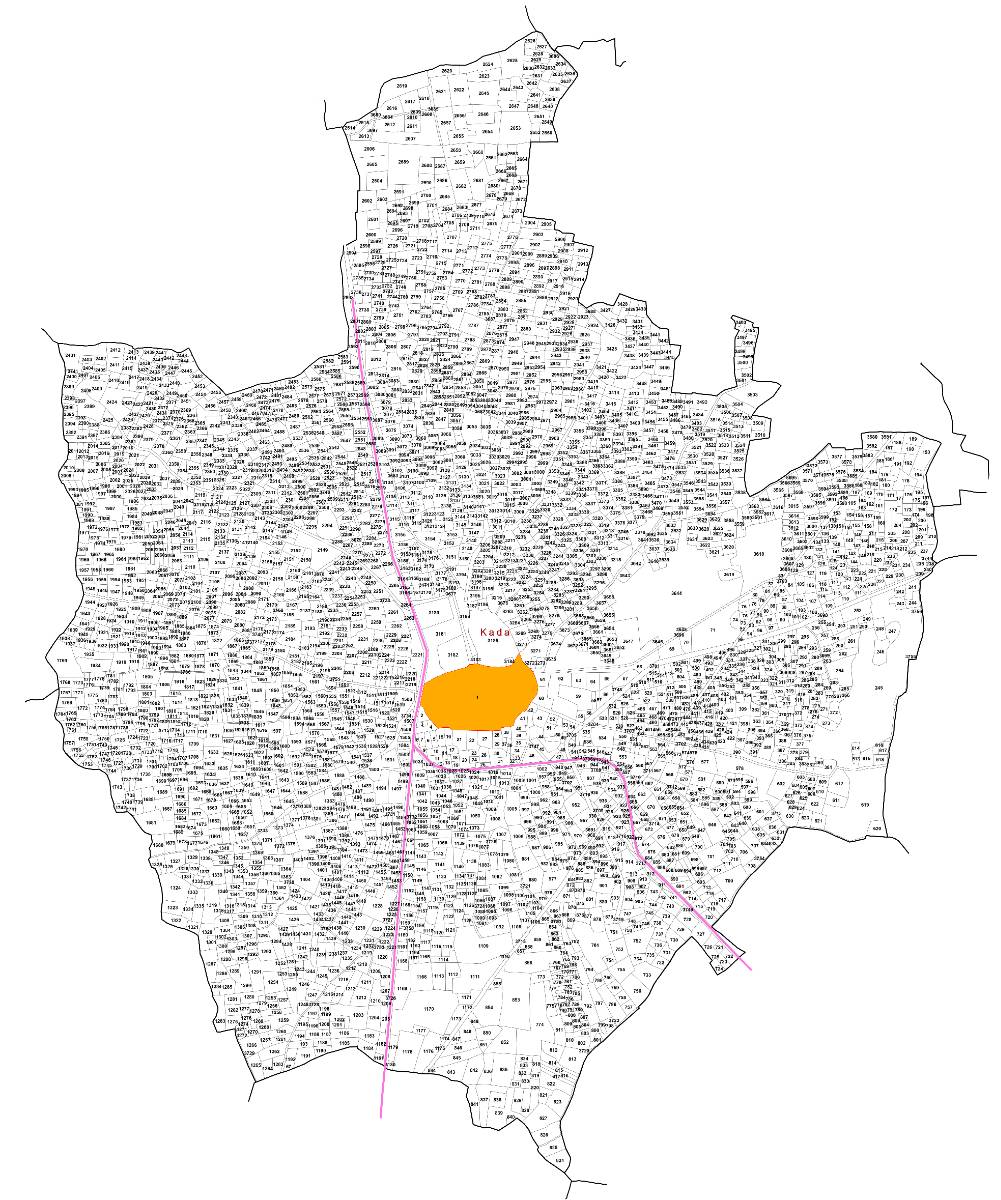
Kada is a village in Visnagar taluka, Mehsana district, Gujarat. The village has a population of 6,427, according to the 2011 Census. Kada is located 8 km from Visnagar and 27 km from Mahesana. With a literacy rate of 86.3%, Kada shows a commitment to education. The area has a mixed economy with a significant portion of the workforce engaged in agriculture. Understanding the village's location, demographics, infrastructure, and economy can help property buyers and land investors make informed decisions.
Kada's geography includes a total area of 2109.1 hectares, supporting agriculture and other economic activities. The village benefits from its proximity to Visnagar and Mahesana, offering access to markets and services. Connectivity is further enhanced by a post office and bus service, while mobile coverage provides modern communication links.
The village operates under the Gram Panchayat KADA, which plays a key role in local governance. Information about land use zoning and non agricultural (NA) conversion processes is important for development. Future growth will depend on effective planning and alignment with broader regional development goals.
Kada's infrastructure includes six schools, indicating investment in education. A sub centre provides basic healthcare services. While the census data offers a snapshot, further investigation into land records and title verification is important for potential investors.
The local economy is largely driven by agriculture, with cultivators and agricultural labourers forming a significant portion of the workforce. The worker participation rate is 39.7%. Analyzing land price trends and investment potential requires a balanced assessment of the village's strengths and weaknesses.

Location and Geography
Kada is situated in the Visnagar taluka of Mehsana district, Gujarat. The village is located approximately 8 kilometers away from Visnagar, the sub district and nearest town. Mahesana, the district headquarters, is 27 kilometers away. Understanding the location's relationship to these key centers matters for assessing access to markets, services, and administrative support.
The total geographical area of Kada is 2109.1 hectares. This land area supports the village's population and its agricultural activities. Population density is 3.0 persons per hectare. Further details regarding the terrain, soil type, and specific water resources available in Kada are not provided in the census data. More detailed surveys would be needed to get that information.
The lack of specific data on terrain and soil types makes it harder to assess the full agricultural potential. Knowing the availability of water resources is important for investment. Gujarat has seen several initiatives to improve water availability. These include the Sardar Sarovar Project and various watershed development programs. Details about which programs, if any, benefit Kada are not available in the census data.
The proximity to Visnagar and Mahesana provides Kada with certain advantages. These include access to larger markets for agricultural produce and access to better healthcare and educational facilities. Transportation links between Kada and these urban centers are crucial for economic growth. Knowing about these would give more insight into investing in Kada.
The Gram Panchayat KADA plays a key role in managing local resources and implementing development programs. The effectiveness of local governance directly impacts the quality of life and the attractiveness of the village for potential investors. This includes its ability to manage natural resources in a sustainable way.
Socio Demographic Profile
According to the 2011 Census, Kada has a population of 6,427 residents. Of these, 3,356 are male and 3,071 are female. This demographic breakdown is important for understanding the social structure and planning for community needs. The number of households in Kada is 1,391. This gives an idea of average family size and housing demand.
The literacy rate in Kada is 86.3%. This figure shows a relatively high level of educational attainment within the village. Education is a key indicator of development. A high literacy rate can lead to a more skilled workforce and greater economic opportunities.
The sex ratio in Kada is 915 females per 1,000 males. This ratio is lower than the national average. Addressing gender imbalances is an important social goal. The Scheduled Castes (SC) population in Kada is 476. The Scheduled Tribes (ST) population is 4. These numbers are important for understanding the social composition of the village.
The worker participation rate in Kada is 39.7%. This indicates the percentage of the population engaged in economic activities. Understanding the workforce composition is vital for economic planning. A significant portion of the workforce, 60.4%, is dependent on agriculture. This reliance highlights the importance of agriculture to the local economy.
The total number of workers in Kada is 2,552. Among these, 858 are main cultivators and 684 are agricultural labourers. These figures further emphasize the dominance of agriculture. Diversifying the economy beyond agriculture could create new opportunities. This could help to improve the overall economic resilience of the village.
Planning and Governance
Understanding the planning and governance framework is needed for property buyers and land investors. Unfortunately, the census data does not provide specific details on Floor Space Index (FSI) or Floor Area Ratio (FAR) rules. It also lacks information on land use zoning or the Non Agricultural (NA) conversion process. These details are crucial for any construction or development project.
In the absence of census data, investors must consult local authorities for this information. The Gram Panchayat KADA would be the primary point of contact. They can provide details on local regulations and development plans. The Visnagar Taluka office can also offer guidance on land use and conversion processes.
The NA conversion process involves obtaining permission to convert agricultural land for non agricultural purposes. This process varies from state to state. In Gujarat, it typically involves submitting an application to the relevant authorities. This often includes providing land documents, project details, and payment of conversion fees.
Information on any Master Plan alignment for Kada is also not available in the census data. Master Plans provide a long term vision for the development of an area. It outlines land use, infrastructure, and other key aspects. Investors should check with the local planning authorities to see if Kada is covered by any regional Master Plan.
The NITI Aayog has a major impact on promoting sustainable development across India. The organization focuses on integrated planning and coordination across different sectors. Land investors and property buyers can refer to NITI Aayog's reports and guidelines for insights on best practices. (https://niti.gov.in/)
Physical Infrastructure
Kada benefits from some basic connectivity. The village has a post office and bus service. Mobile coverage is also available, facilitating communication. These features are important for residents and businesses alike. They enable access to essential services and information.
Specific details about road connectivity within Kada are not available in the census data. But the village is 8 km from Visnagar and 27 km from Mahesana. This proximity suggests some level of road connectivity to these urban centers. Investors should assess the quality and capacity of these roads. This is important for transportation of goods and people.
Information on the power supply situation in Kada is not provided in the census data. Consistent and reliable power supply is critical for economic activities. It also improves the quality of life for residents. Investors should investigate the availability and reliability of power infrastructure. The Gujarat state electricity board could be contacted for more information.
Similarly, details about the water supply infrastructure in Kada are not available. Access to clean and reliable water is necessary for both domestic and agricultural purposes. Investors should assess the sources of water. They should also assess the distribution network to understand the potential for future development.
The Digital India Land Records Modernization Programme (DILRMP) aims to modernize land records. The goal is to improve transparency and efficiency. This also reduces disputes. (https://dolr.gov.in/) While not specific to Kada, this national initiative can help investors verify land ownership and access records. The PM Gati Shakti National Master Plan also aims to improve infrastructure connectivity. (https://pmgatishakti.gov.in/) While not specific to Kada, this initiative focuses on integrated planning and coordinated implementation of infrastructure projects.
Social Infrastructure
Kada has several schools, reflecting an investment in education. According to the census data, there are 6 schools in total. These include 4 primary schools, 1 secondary school, and 1 senior secondary school. This range of educational institutions provides access to learning for children of different ages.
The presence of a senior secondary school is particularly important. It allows students to complete their education without having to travel to other towns. This increases the chances of students continuing their studies. It also helps in building a more educated population.
In terms of healthcare facilities, Kada has 1 sub centre. Sub centres are basic healthcare units that provide primary care services to rural populations. While this is a start, additional healthcare facilities may be needed to fully serve the needs of the village. The availability of healthcare affects the quality of life and attractiveness of the area for residents.
The census data does not provide information on other local institutions such as community centers or libraries. These types of institutions play an important role in community development. They promote social interaction and provide access to information and resources.
The Ministry of Housing and Urban Affairs (MoHUA) implements various programs aimed at improving the quality of life in urban and rural areas. (https://mohua.gov.in/) While not specifically targeted at villages, these programs often have components that can benefit rural communities through improved infrastructure and services.
Land Records Verification Guide
Verifying land records significantly affects any property buyer or land investor. It helps prevent fraud. It also ensures clear ownership. Here is a practical guide for verifying land records in Gujarat, keeping in mind that specifics can change.
Step 1: Access Online Land Records Portal
Gujarat provides online access to land records through its official portal, e-Dhara. Search e Dhara Gujarat to find the website. This portal allows you to search for land records, view property details, and download copies of documents. It streamlines the process. It used to be more difficult to get information.
Step 2: Search for Property Details
On the e Dhara portal, you can search for property details using various parameters. These include:
- Village Name: Select Kada from the list of villages.
- Survey Number: Enter the survey number of the land you are interested in.
- Owner Name: Search by the name of the current owner.
Using these details, you can locate the specific land record you need to verify.
Step 3: View and Download Land Records
Once you have located the land record, you can view the details online. This typically includes information such as:
- Owner's Name: The name of the legal owner of the property.
- Land Area: The size of the land in hectares or square meters.
- Type of Land: Whether the land is agricultural, residential, or commercial.
- Encumbrances: Any existing loans, mortgages, or legal disputes on the land.
You can usually download a copy of the land record for your reference.
Step 4: Check for Mutations
A mutation is the transfer of title of a property. This occurs when the property is sold or transferred. It is important to check the mutation records. This ensures that the current owner is legally recognized.
You can check for mutations on the e Dhara portal by searching for mutation records related to the property. Look for any recent transfers. Also, verify that these transfers are properly registered.
Step 5: Verify the Title Chain
The title chain is the history of ownership of the property. This is going back to the original owner. Verifying the title chain is crucial to ensure that there are no breaks in the ownership history.
To verify the title chain, you will need to examine the previous sale deeds and transfer documents. These can usually be found in the sub registrar's office. You can also seek the help of a lawyer to conduct a thorough title search.
Step 6: Visit the Sub Registrar's Office
For complete verification, visit the Sub Registrar's Office in Visnagar. This is where all property transactions are officially registered. You can request certified copies of land records. This is helpful to verify the information you found online.
Step 7: Seek Legal Assistance
Engaging a lawyer specializing in property law is always a good idea. A lawyer can help you conduct a thorough title search. They can also review the land records for any potential issues. They will give you advice on the legal aspects of the transaction.
Verifying land records is a detailed process. Taking these steps can help protect your investment. It also helps ensure a smooth and legal property transaction.
Economic Engine of Kada
The local economy of Kada is largely driven by agriculture. This is a common pattern in many Indian villages. According to the census data, 60.4% of the workforce is dependent on agriculture. This underscores its importance.
The census data identifies 858 residents as main cultivators. It also identifies 684 as agricultural labourers. These numbers show the significant role of farming in the village's economy. Cultivators are farmers who own or lease land. Agricultural labourers work on other people's farms for wages.
Specific details on nearby industries are not available in the census data. Given Kada's proximity to Visnagar (8 km) and Mahesana (27 km), residents may commute to these towns for work. These towns likely offer a wider range of employment opportunities. These include manufacturing, services, and trade.
The worker participation rate in Kada is 39.7%. This means that a significant portion of the population is not actively employed. This could be due to various factors. These include unemployment, underemployment, or participation in household duties.
Diversifying the economy beyond agriculture could improve the economic well being of the village. This could involve promoting small scale industries. It could also include developing tourism or other service sectors. Skill development programs could help residents find new employment opportunities.
The government of Gujarat has implemented various programs to support rural economies. These programs often focus on promoting agriculture, entrepreneurship, and skill development. Kada's Gram Panchayat can play a role in accessing and implementing these programs. This could improve the local economy.
Investment Potential and ROI
Investing in land requires careful consideration. This includes understanding the land price trends. It also includes assessing the potential for return on investment (ROI). Unfortunately, specific land price data for Kada is not available in the census.
To assess land price trends, investors should consult local real estate brokers. They should also check property listings. They should also research recent land transactions in the area. This will provide a sense of the current market value of land in Kada. Proximity to Visnagar and Mahesana may positively influence land prices.
Several factors can influence the investment potential of land in Kada. These include:
- Agricultural Productivity: The fertility of the soil and availability of water resources are critical for agriculture.
- Infrastructure Development: Improved road connectivity, power supply, and water supply can increase land value.
- Government Policies: Government policies related to land use, zoning, and NA conversion can impact development potential.
- Economic Growth: Overall economic growth in the region can drive demand for land.
Investors should carefully weigh these factors before making any investment decisions.
Disclaimer: Investing in land carries inherent risks. Land values can fluctuate based on market conditions and other factors. There is no guarantee of a specific ROI. Investors should conduct thorough due diligence. They should seek professional advice before investing in land.
Here is a table summarizing potential investment considerations:
| Factor | Potential Impact |
|---|---|
| Agricultural Productivity | Higher productivity can increase land value and rental income. |
| Infrastructure Development | Improved infrastructure can attract businesses and residents, boosting land value. |
| Government Policies | Favorable policies can facilitate development and increase investment potential. |
| Economic Growth | Strong economic growth can drive demand for land, leading to higher returns. |
Remember that agriculture dependency is currently 60.4%. This number may decrease as alternate industries come to the area.
Strategic Analysis: SWOT and Growth Outlook
A strategic analysis of Kada involves understanding its strengths, weaknesses, opportunities, and threats (SWOT). This helps in assessing its growth outlook and investment potential.
Strengths:
- Relatively High Literacy Rate: The literacy rate of 86.3% indicates a well educated population.
- Proximity to Urban Centers: Kada's location near Visnagar (8 km) and Mahesana (27 km) provides access to markets and services.
- Basic Infrastructure: The presence of a post office, bus service, and mobile coverage provides essential connectivity.
- Educational Institutions: The presence of 6 schools, including a senior secondary school, supports human capital development.
Weaknesses:
- High Dependence on Agriculture: The economy's heavy reliance on agriculture (60.4% workforce) makes it vulnerable to weather and market fluctuations.
- Limited Healthcare Facilities: Only 1 sub centre may not be sufficient to meet the healthcare needs of the population.
- Lower Sex Ratio: The sex ratio of 915 females per 1,000 males indicates a gender imbalance.
- Lack of Specific Data: Limited data on terrain, soil type, water resources, and land use planning makes it difficult to assess development potential.
Opportunities:
- Economic Diversification: Promoting non agricultural activities such as small scale industries, tourism, and services can create new jobs.
- Infrastructure Development: Improving road connectivity, power supply, and water supply can attract investment and improve quality of life.
- Skill Development: Providing vocational training and skill development programs can enhance the employability of residents.
- Government Programs: Accessing and implementing government schemes related to agriculture, rural development, and entrepreneurship can boost economic growth.
Threats:
- Climate Change: Erratic rainfall and extreme weather events can negatively impact agriculture.
- Market Volatility: Fluctuations in agricultural commodity prices can affect the income of farmers.
- Lack of Investment: Insufficient investment in infrastructure and economic diversification can hinder growth.
- Social Issues: Gender inequality and other social issues can impede development.
Based on this analysis, Kada's growth outlook depends on its ability to leverage its strengths. It also requires addressing its weaknesses and capitalizing on opportunities. Mitigating potential threats is also necessary. Diversifying the economy supports sustainable development. This will make Kada more resilient to external shocks.
Here is a table summarizing the SWOT analysis:
| Strengths | Weaknesses | |
|---|---|---|
| Internal Factors | High literacy, proximity to urban centers | High agriculture dependency, limited healthcare |
| Opportunities | Threats | |
| External Factors | Economic diversification, infrastructure | Climate change, market volatility |
Frequently Asked Questions
Q: How can I find out the current land prices in Kada?
A: Land prices are not available in the census data. You can contact local real estate brokers or visit property listing websites. Checking with the Visnagar sub registrar's office can also provide information on recent land transactions.
Q: How do I convert agricultural land to non agricultural (NA) land in Kada?
A: The process involves applying to the local authorities. You will have to provide land documents, project details, and pay conversion fees. Consult the Visnagar Taluka office for specific requirements.
Q: Where can I find information on land use zoning regulations in Kada?
A: Land use zoning information is not in the census data. You can contact the Gram Panchayat KADA or the Visnagar Taluka planning office for details on local zoning regulations.
Q: How do I verify the ownership of a piece of land in Kada?
A: You can verify land ownership through the e Dhara portal. Also, visit the Sub Registrar's Office in Visnagar. It is recommended to engage a lawyer specializing in property law to conduct a thorough title search.
Q: Are there any government schemes available to support agriculture or rural development in Kada?
A: Contact the Gram Panchayat KADA or the District Rural Development Agency (DRDA) in Mahesana. They can provide information on available government schemes. They can also help you with the application process.
Conclusion
Kada presents a mixed picture for potential property buyers and land investors. The village benefits from its relatively high literacy rate and proximity to Visnagar and Mahesana. However, its heavy reliance on agriculture and limited infrastructure pose challenges. A thorough understanding of local land regulations, careful due diligence, and a balanced assessment of risks and opportunities are essential for making informed investment decisions. Diversifying the local economy and improving infrastructure will be key to Kada's future growth and prosperity.